

Facebook offers many ways for people to interact with your content, but not every interaction has the same impact. While reactions show that people enjoyed a post, shares can introduce your content to completely new audiences. If you’re trying to grow a Facebook page in 2026, understanding the role of both metrics helps you create a smarter content strategy instead of chasing numbers that look good but deliver little reach.
What do Facebook shares and reactions actually tell you?
Both metrics measure engagement, but they reflect different types of audience behavior.
- Reactions show immediate appreciation.
- Shares indicate that someone found your content valuable enough to recommend it to others.
For page owners, understanding this difference makes it easier to decide which content deserves to be repeated.
A quick comparison
This comparison shows that Facebook Shares and Reactions both play important roles, but they contribute to growth in different ways. Reactions indicate that people enjoyed a post, while shares help introduce it to new audiences and create greater opportunities for long-term visibility. Using both metrics together provides a more complete picture of overall content performance.
| Metric | Facebook Shares | Facebook Reactions |
|---|---|---|
| Purpose | Expands content reach | Shows audience appreciation |
| Visibility | Can reach new people | Mostly stays within existing audience |
| Long-term value | Higher | Moderate |
| Community growth | Stronger | Limited |
| Best for | Discoverability | Engagement signals |
Why shares often have a bigger impact
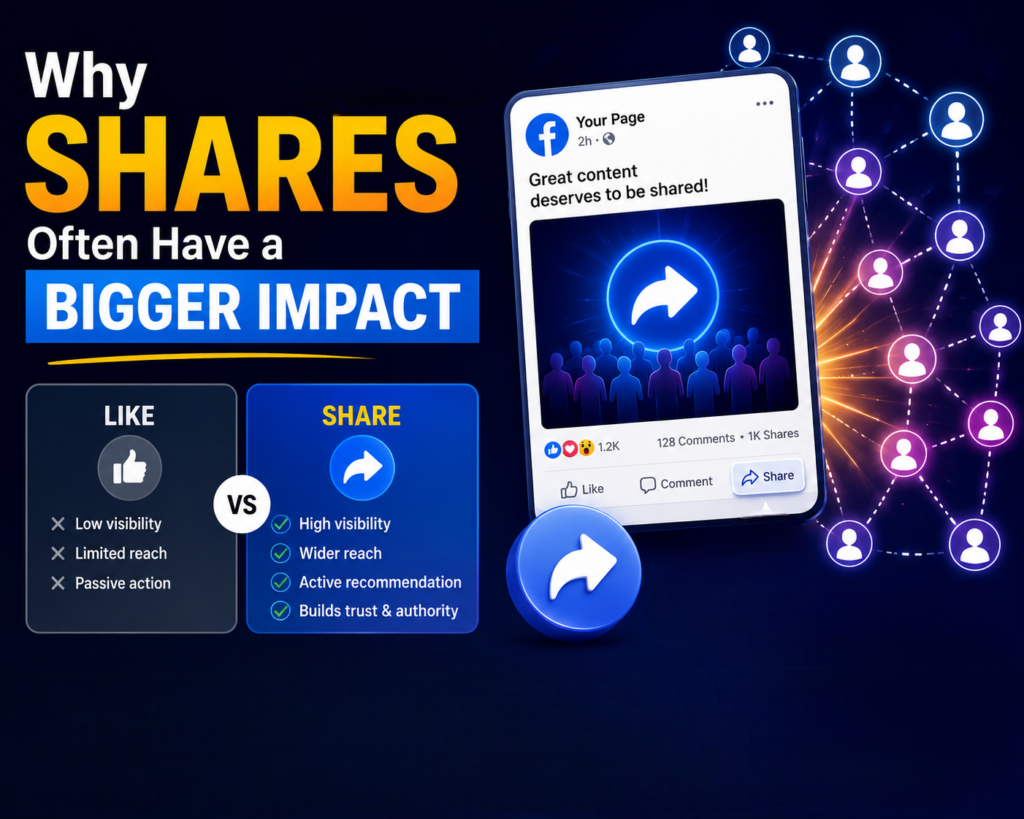 When someone shares your post, it appears in front of their friends, followers, or community. This gives your content another opportunity to earn comments, reactions, and additional shares without creating a new post.
Posts that solve problems, share useful information, or spark discussion naturally receive more shares than promotional content.
Content people usually share:
- Helpful guides
- Interesting statistics
- Educational graphics
- Relatable stories
- Community discussions
Why reactions still matter
Although reactions don’t expand your reach as much as shares, they remain an important engagement signal. They tell Facebook that people are interacting with your content, especially during the first few hours after publishing.
Higher reactions can also encourage other users to stop scrolling and pay attention to your post.
When should you focus on shares instead of reactions?
If your goal is page growth, reach should usually come before popularity.
Choose share-focused content when you want to:
- Reach new audiences.
- Increase page visibility.
- Grow organically over time.
- Build brand awareness.
If you’re posting updates for existing followers, reactions may become a more useful performance indicator.
What successful Facebook pages usually do
Instead of chasing one metric, experienced page owners create posts that naturally encourage multiple types of engagement.
They often:
- Ask thoughtful questions.
- Publish useful content people want to save or share.
- Use clear images with simple messaging.
- Respond to comments quickly.
- Maintain a consistent posting schedule.
Which metric should you track first?
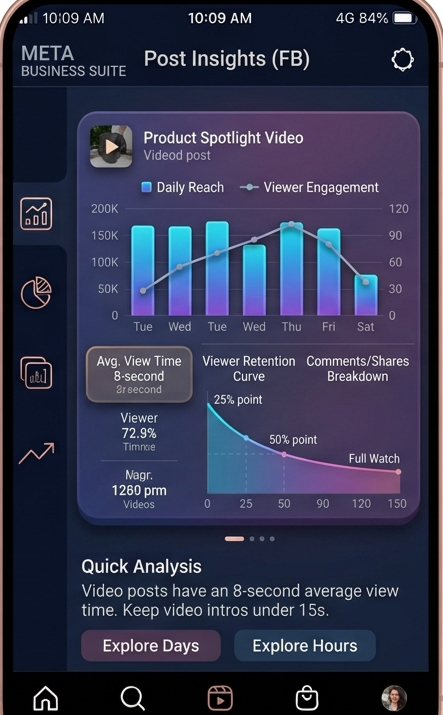 There’s no single number that defines success. Looking at multiple metrics together gives a clearer picture of how your content is performing.
Review these regularly:
- Shares
- Reach
- Comments
- Reactions
- Link Clicks
- Engagement Rate
Supporting Your Best Posts
Creating valuable content should always come first. Once you identify posts that already perform well, many creators choose to give them additional visibility instead of promoting every update. Trusted platforms like Adflee can help quality Facebook content reach a wider audience while you continue focusing on organic engagement and long-term page growth.